Intensive Planting in the Vegetable Garden

Intensive vegetable gardening is the name given to a way of using garden space and soil nutrients to produce high yields of flavorful crops.
The intensive planting method of vegetable gardening is perhaps the most efficient and effective of all growing methods. It is both resource-conserving and sustainable.
The origins of this method can be traced back 4,000 years to ancient China. Two thousand years ago similar approaches were in use in Latin America, Europe, and parts of Asia. Just more than 100 years ago, market vegetable gardeners around Paris began using this method to supply fresh vegetables to urban shoppers; intensive planting produced enough food for a large population on relatively scarce land.
Modern vegetable gardeners call intensive garden by many names: the Chinese way to garden, French intensive gardening, biodynamic gardening, and more recently Postage Stamp and Square Foot gardening.
Backyard gardeners can easily employ intensive gardening methods to increase both the variety and yield of crops they grow.
Principles and methods of intensive vegetable gardening
Here are the important principles and methods of intensive vegetable gardening:
Soil improvement
The soil is well-prepared before planting. The site for planting is cleared of all weeds and debris then 3 to 4 inches of organic matter is spread over the site and dug or tilled into the soil. Aged compost, well-rotted manure, grass clippings, chopped leaves, or combinations of these are the most nutrient-rich amendments for vegetable growing. It is best to add amendments to the soil a month or more before planting; this allows nutrients to disperse throughout the soil. Later a mulch of compost is spread across the bed to prevent rain and wind from washing or blowing away the soil. The soil can be pre-warmed with plastic mulch—black or clear plastic sheeting spread—before sowing or transplanting crops.
Narrow beds and wide rows
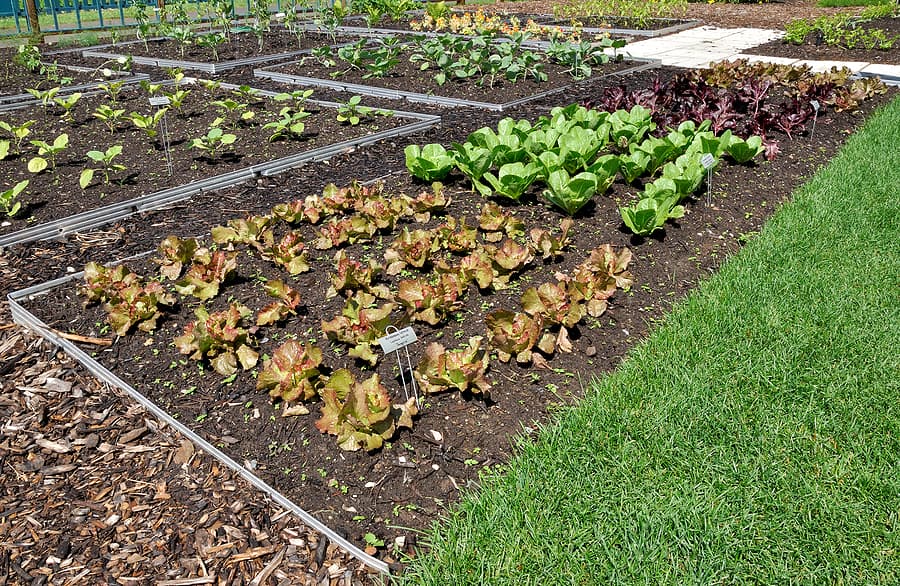
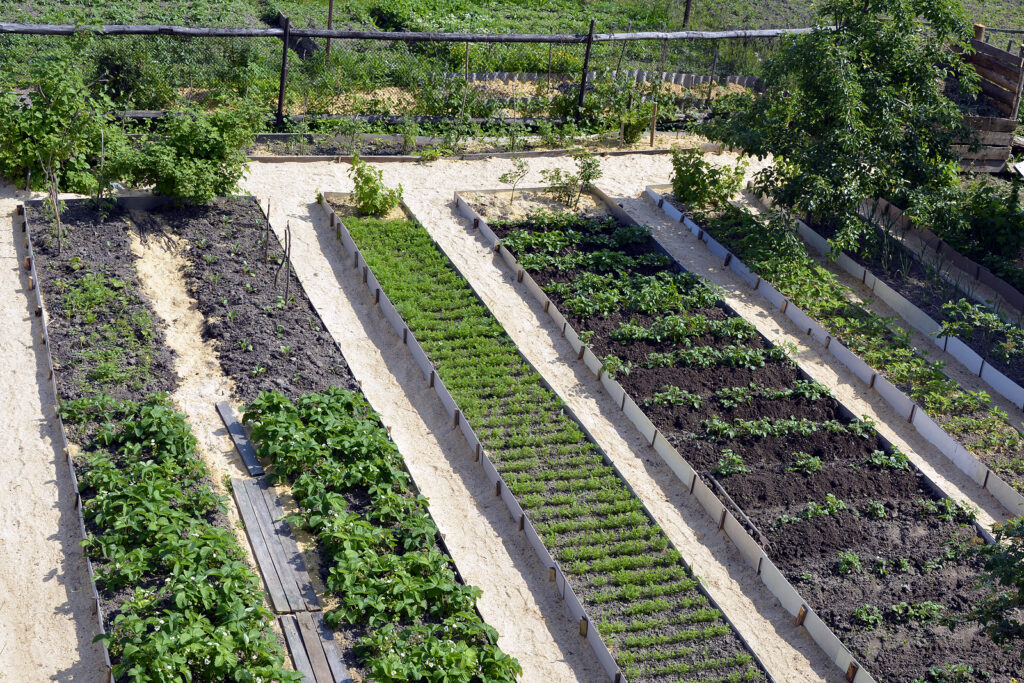
Intensive planting means spacing crops closely. Plants are arranged two three or more plants or rows across a single bed—called a narrow bed or wide row. Seeds are sown or transplants are set in the garden so that their leaves grow to just touch at maturity; nearly every inch of growing space in a bed is used for growing. Permanent pathways run between planting beds. The number of plants in a narrow bed or wide row varies according to how far the gardener can reach. Once a bed or wide row is planted, the gardener never steps onto the growing soil; she simply reaches arm’s length into the bed to plant, tends, and harvest each crop. Narrow beds and wide rows make it easier to sustain soil improvement. Plant nutrients and water are never wasted on pathways or unplanted spaces between crops.
Equidistant planting
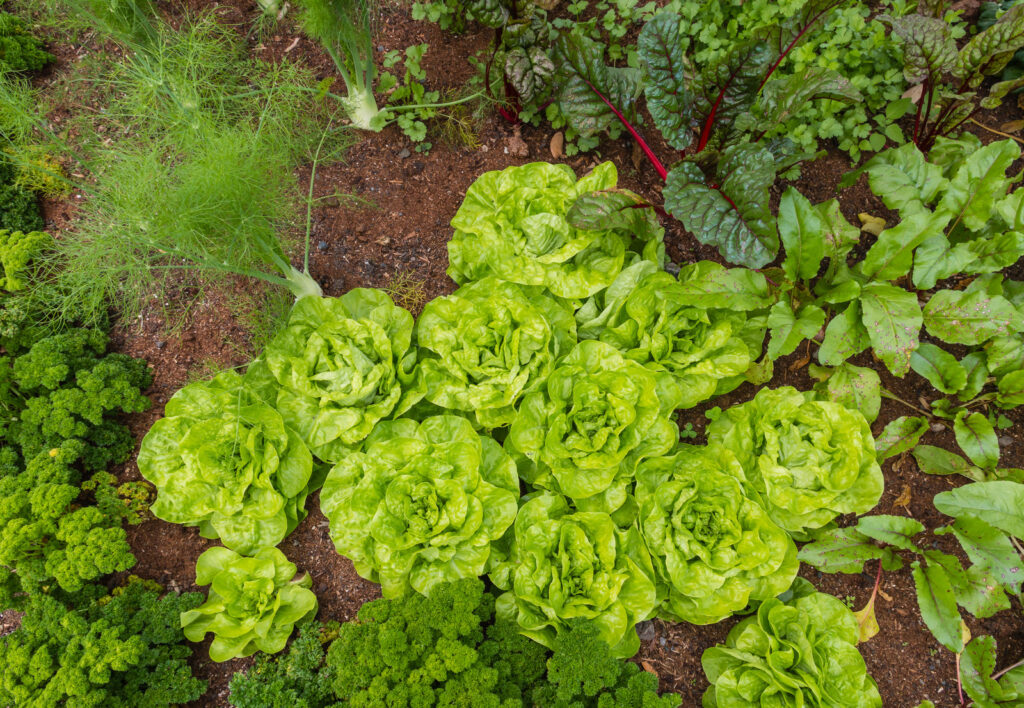
Equidistant planted vegetables produce the most food. To plant traditional rows you stake out rows with a taut string and space the seeds or seedlings at the distance recommend by seed packets or plant labels. Traditional row gardens leave 6 to 12 inches or more between rows; that’s unused soil. In equidistant or intensive plants, seed and seeds are set not in rows but at a distance that allows each plant to reach its mature size and just overlap with each of its neighboring plants. Plants are set equidistant in all directions–spacing is closer than the straight row recommended distance found on seed packets.
When intensively planted seeds and seedlings are space to just overlap at maturity or to just touch at three-quarters maturity–every inch of grown ground becomes productive. Intensively planted crops are commonly grown in wide rows set in narrow beds Less open space between growing plants means more production.
Plants set equidistant from each other in wide rows form naturally staggered or offset rows; they form a triangular grid pattern when viewed from above. When equidistant from one another plants of equal size a maturity will appear to be set at the three points of an equilateral triangle. Equidistant planting in a triangular grid pattern provides the most efficient use of space allowing gardeners to grow the greatest number of plants in a given are (16 percent more plants than plants on a square grid).
Equidistant plant spacing
There are several ways to accomplish equidistant planting. To begin, the approximate size of each plant at maturity must be known (see the list below). With the size at maturity known, space plants or sow seeds equidistant from one another using a triangular grid; this method will accomplish equidistant spacing and intensive planting.
Here are the approximate diameters of vegetables at maturity:
- Beans: 4-6”
- Beets: 2-4”
- Cabbage: 15”
- Carrots: 2”
- Cauliflower: 15”
- Celery: 6-8”
- Chard: 8-12”
- Chinese cabbage: 12-18”
- Collards: 15-18”
- Endive: 6-12”
- English peas: 4-6”
- Garlic: 4-8”
- Kale: 12”
- Kohlrabi: 5-8”
- Leeks: 6”
- Lettuce: 6-9”
- Mustard: 4-6”
- Onions: 3-5”
- Parsley: 6-8”
- Parsnips: 3-4”
- Peppers: 24”
- Radishes: 2-4”
- Rutabagas: 6-8”
- Southern peas: 6”
- Spinach: 4-6”
- Turnips: 2-6”
Interplanting, also called intercropping
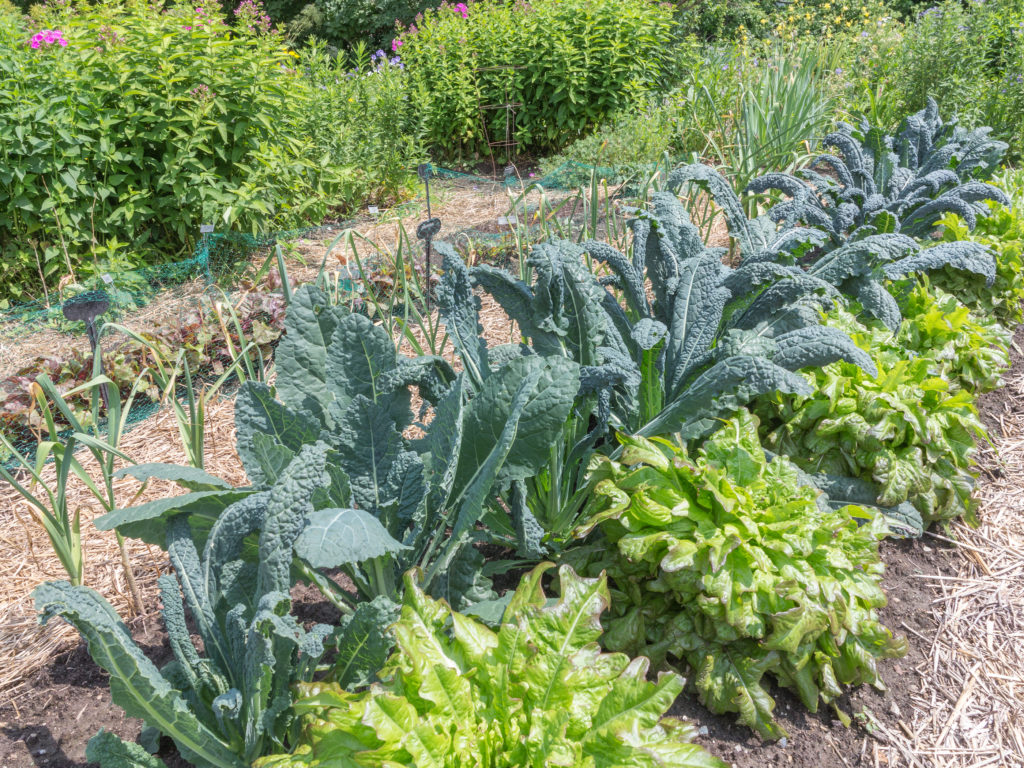
Interplanting is a growing method that will allow you to fit more vegetable plants in a single planting bed. It is a way to increase your crop yield. Interplanting is also called intercropping.
Interplanting is often used in intensive vegetable gardening where an effort is made to use all available space in the growing area–the counterpoint to single-row planting which requires the most cropping space since the space between rows goes unplanted. (In intensive gardening you can space plants individually equidistance apart or in wide rows–several plants across a row to as much as 4 feet wide.)
There are several ways to interplant your crops. You can grow fast-maturing plants, such as radishes, between slower-growing ones, say chard. The radishes will be ready for harvest before the chard begins to mature and requires more space to spread out. This way of interplanting borders on succession cropping–bringing one crop to harvest after another keeping the planting bed productive all season.
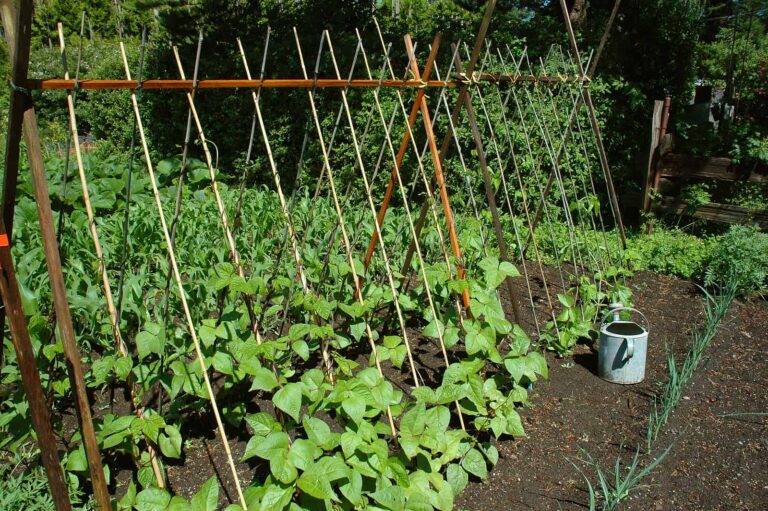
You can also interplant crops with different growing habits, tall crops near short ones, or deep-rooted with shallow-rooted. Crops interplanted by growing habit can be set equidistant according to their size (height and breadth or root depth) at maturity, or they can be planted in their own alternate rows in a wide bed.
Interplanting requires planning. You need to know the days to maturity for each crop and its height and breadth at maturity or its root depth at maturity. Do some planning on paper once you have decided on the crops you will be growing this season.
To assist your planning here are two charts that might help: one for plant height at maturity, one for rooting depth (For additional information on vegetable crop root development, see the 1927 book “Root Development of Vegetable Crops” by John Weaver of the University of Nebraska.):
Root depth
| Shallow Rooting (18 to 36 inches) | Medium Rooting (36 to 48 inches) | Deep Rooting (more than 48 inches) |
|---|---|---|
| Broccoli | Beans, snap | Artichokes |
| Brussels sprouts | Beets | Asparagus |
| Cabbage | Carrots | Beans, lima |
| Cauliflower | Chard | Parsnips |
| Celery | Cucumbers | Pumpkins |
| Chinese cabbage | Eggplant | Squash, winter |
| Corn | Peas | Sweet potatoes |
| Endive | Peppers | Tomatoes |
| Garlic | Rutabagas | |
| Leeks | Squash, summer | |
| Lettuce | Turnips | |
| Onions | ||
| Potatoes | ||
| Radishes | ||
| Spinach |
Plant height
| Tall | Medium | Short |
|---|---|---|
| Beans, pole | Anise | Basil |
| Broccoli | Artichokes | Beets |
| Corn, sweet | Broccoli | Borage |
| Fennel | Brussels sprouts | Cabbage |
| Mustard | Lemon balm | Caraway |
| Okra | Beans, bush | Carrots |
| Peas | Broccoli | Cauliflower |
| Sunchokes | Brussels sprouts | Celery |
| Tomatoes | Cardoon | Chervil |
| Chard | Chives | |
| Chinese cabbage | Corn salad | |
| Collards | Dandelion | |
| Coriander | Endive | |
| Cucumber | Garlic | |
| Dill | Kale, dwarf | |
| Eggplant | Kohlrabi | |
| Hyssop | Leeks | |
| Kale, curled | Lettuce | |
| Lavender | Onions | |
| Marjoram | Parsley | |
| Peas, dwarf | Parsnips | |
| Peppers | Radishes | |
| Potatoes | Rutabaga | |
| Pumpkins | Savory | |
| Rhubarb | Thyme | |
| Sage | Turnips | |
| Spinach | ||
| Squash | ||
| Sweet potatoes |
Companion planting
The term companion planting can mean different things to different gardeners. Companion planting can include: (1) Planting different kinds of crops together in a garden bed to make the best use of garden space and each crop’s growing habit to increase the overall yield. This type of companion planting is called inter-cropping, for example, planting a low-growing crop that requires shade between two taller growing crops. (2) Planting specific flowering plants near a vegetable garden to attract beneficial and pollinating insects, and also planting plants that will attract a particular pest; that, in turn, protects a desired crop from damage. This type of companion planting is called trap-cropping. (3) Planting specific crops alongside one another to improve the flavor of one of the crops. This type of companion planting is based on folk tradition and has not been scientifically proven. For example, old-time garden tradition says planting dill next to cabbage will improve the flavor of the cabbage.
Raised beds
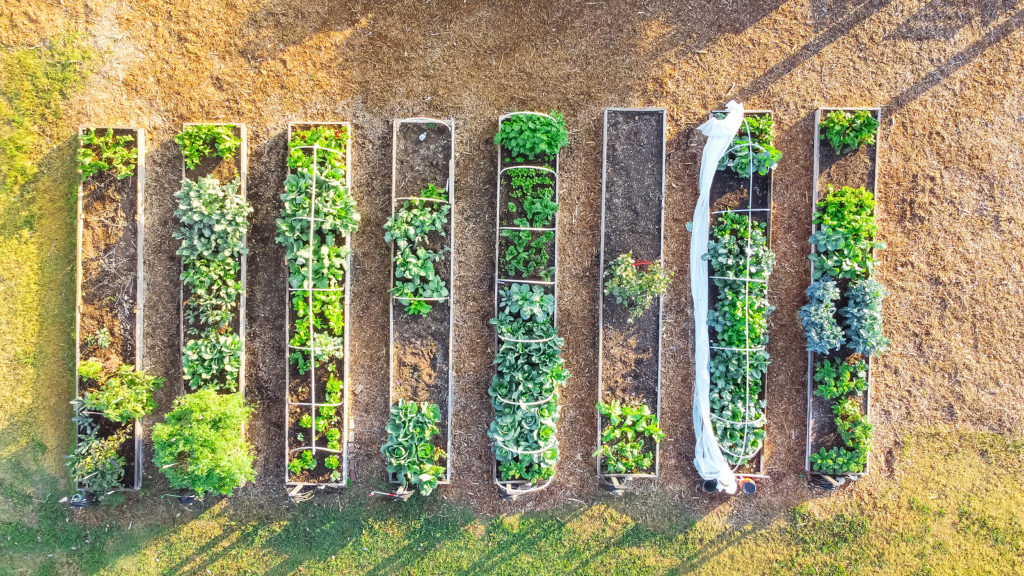
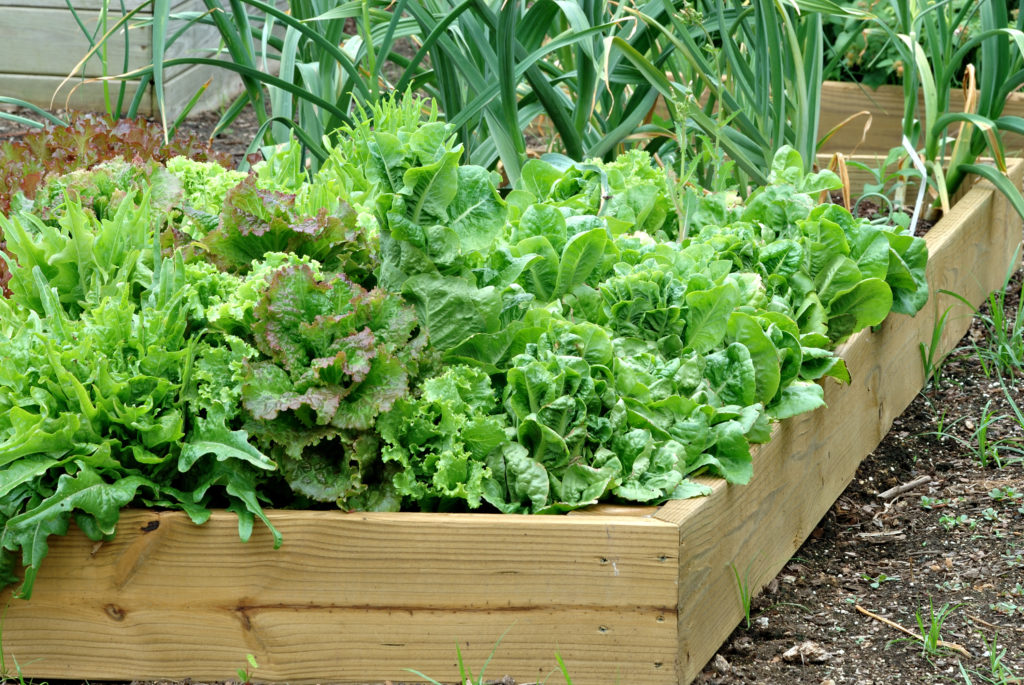
Raised beds are planting beds dedicated to growing crops season after season. A raised bed can be any shape but most commonly is rectangular or square. A simple raised bed can be created by simply hoeing up the soil to make a bed that is higher than the surrounding soil. Spread ground cover bark, and compost, or lay stepping stones into the pathways between beds. Raised beds are the home for narrow beds or wide rows. A raised bed should not be wider than the gardener’s reach to the center of the bed from either side—3 to 5 feet is common. Raised beds should not be any longer than the distance the gardener wants to walk to get to the other side; don’t be tempted to cut across your raised beds. A permanent raised bed can be created by bordering the bed with a frame of lumber, cement blocks, or stones.
Succession planting
Following one crop with another crop is called succession planting. Succession planting allows you to increase your harvest without making your garden larger. For example follow a crop of spring lettuce with summer-growing tomatoes, peppers, or eggplants. Then late in the summer, follow the summer-growing crops with cool-season crops such as lettuce or spinach. Succession planting takes a bit of planning; you will need to know how many days to maturity each crop takes and how many days you have in your growing season—that is the number of days from the last frost in spring to the first frost in fall.
Crop rotation
Crop rotation means planting crops in an order that maintains or enhances soil fertility. Some crops are heavy feeders—meaning they use lots of nutrients in the soil; other crops are light feeders; and some crops are soil builders; they actually give nutrients back to the soil. Heavy feeders include tomatoes, broccoli, cabbage, corn, eggplants, beets, lettuce, and other leafy crops. Heavy feeders are planted after light feeders; light feeders include garlic, onions, peppers, potatoes, radishes, rutabagas, sweet potatoes, Swiss chard, and turnips. Soil builders include peas, beans, and cover crops like clover. Soil builders are planted after light feeders.
You can implement an intensive gardening program in your vegetable garden by introducing each of these elements into your garden—in just the order presented here.
Related articles:
Narrow Bed Wide Row Vegetable Garden Planting
Garden Planning Books at Amazon:
- Vegetable Garden Almanac & Planner
- Kitchen Garden Grower’s Guide Vegetable Encyclopedia
- Vegetable Garden Grower’s Guide
- Tomato Grower’s Answer Book